
Legislative Priorities '26
Council Progressives are committed to fighting for a legislative agenda that tackles the current affordability crisis, protects everyday workers, and protects the physical and mental well-being of every New Yorker.
Prioritizing New Yorkers
Our legislative agenda represents our pathway to a fairer, safer, and more affordable NYC. We are dedicated to making sure every New Yorker can stay in their homes, raise a family, and afford basic necessities without cutting back. Below is our roadmap to a better New York City through working for three pillars:
- For a more affordable city
- For worker justice & consumer protection
- For a safer city & better quality of life
New York City is facing a historic affordability crisis. Not having enough housing readily available to support our city’s needs means rent will keep climbing with no end in sight. On top of that, everyday items cost more, and an uncertain global economy driven by wasteful wars abroad makes it even harder to save for one’s future. The City has a duty to make sure people can stay in their homes, raise a family, and support themselves without cutting back on basic necessities.
Unpredictable federal budget decisions have already put more stress on New Yorkers who rely on assistance from programs like Section 8 vouchers to relieve record-high costs of housing, food, and childcare. We want to make sure every New Yorker can stay in their home, raise a family, and afford the basics without cutting back. Our solutions target housing, transportation, and savings, to give everyone, present and future, a chance at a good life.
SAFER Homes Act
Sponsored by Council Member Sanchez
SAFER Homes Act: The bill overhauls the Third Party Transfer program, creating a powerful tool tailored to the worst buildings. It does so by only focusing on the most financially and physically distressed buildings, providing off ramps and opportunities for owners to rectify their building’s issues to get off the list, enhancing notice and outreach for actions taken, ensuring transfers to qualified and responsible owners, protecting owners’ equity by allowing an opportunity to collect surplus value, and expanding pathways for tenants to create new co-ops.
Community Opportunity to Purchase Act
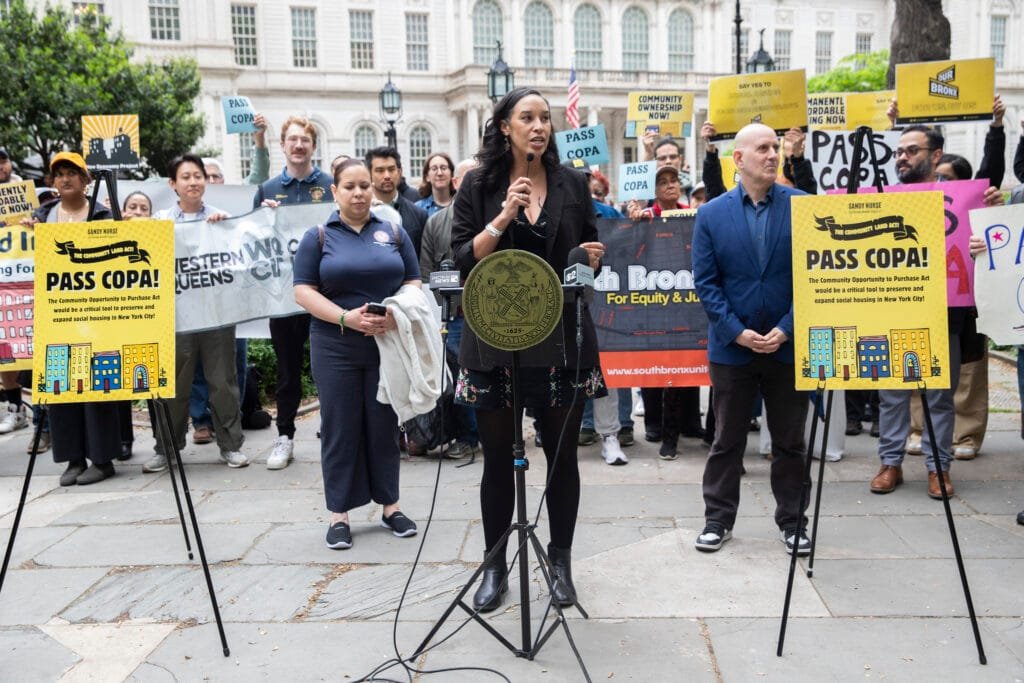
Sponsored by Council Member Nurse
Community Opportunity to Purchase Act: This bill would give qualified entities the first opportunity to purchase certain distressed and at-risk buildings before they go to the open market. This would help ensure affordable housing stays affordable, and that we are bringing distressed properties into productive (and affordable) use.
Establishing a Baby Opportunity Fund
Sponsored by Council Member Hudson
This bill would establish a pilot program for a baby opportunity fund. This fund would be $2,000 deposited into a qualified interest bearing savings account for eligible children.
The City has already begun work on Baby Bonds through the NYC Kids RISE Save for College program, which provides every kindergarten student an initial $100 investment in a state 529 Direct Plan account that can be utilized for higher education. (If the beneficiary doesn’t use it for higher education, up to $35,000 can be rolled over into a Roth IRA.) If a family saved $100 a month in a 529 account for 18 years, they would amass an estimated $35,400 total that could be used for higher education. The City must vastly expand this program and boost the initial investment from $100 per child to at least $2,000, as additional starting capital will yield even greater investment interest.
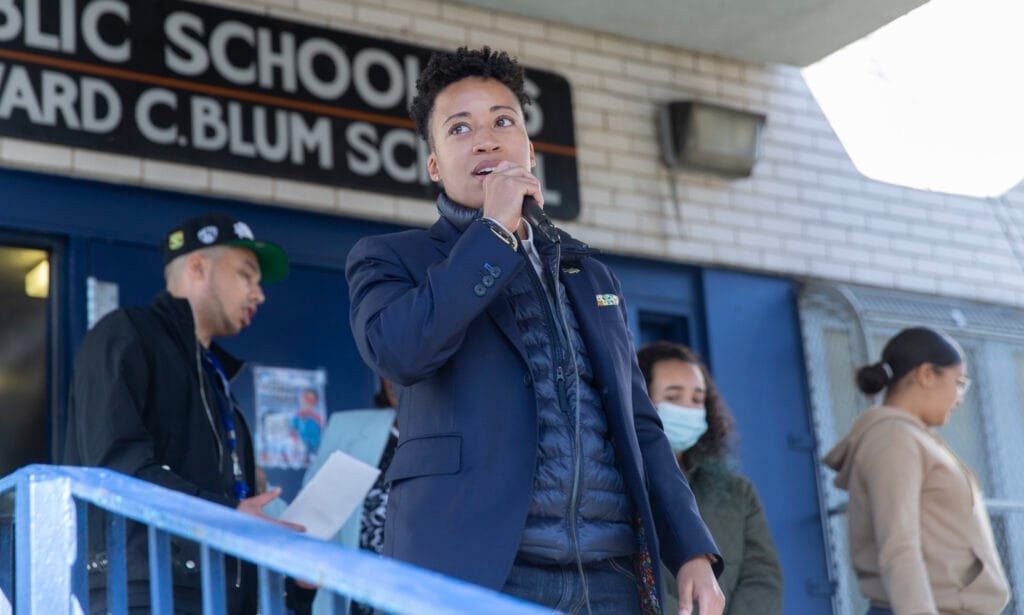
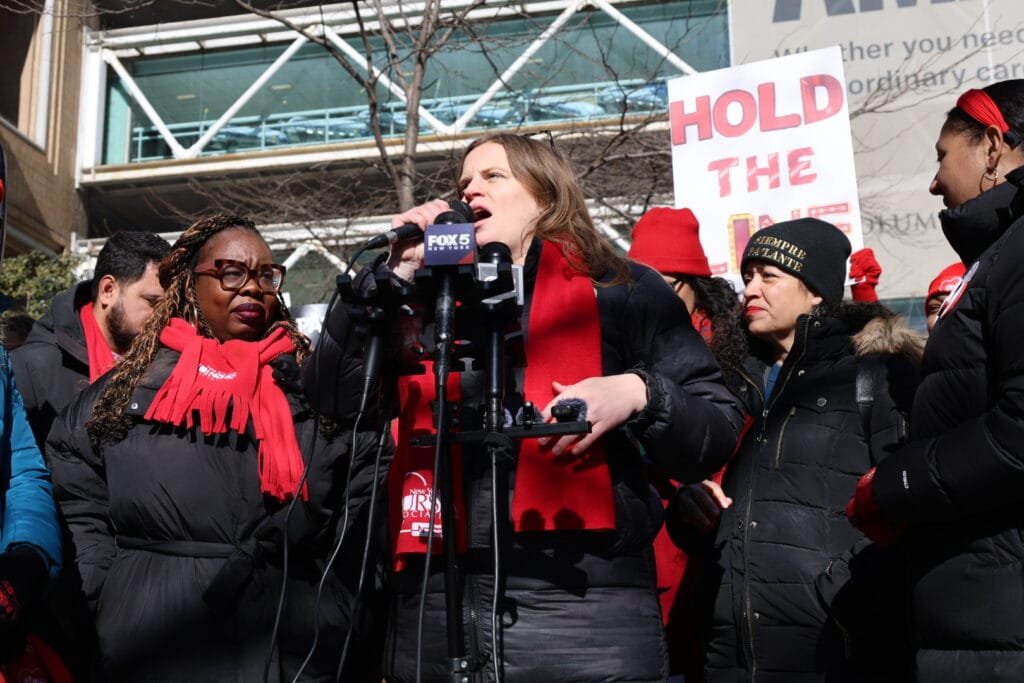
The increase in the cost of living has led many people to take on non-traditional jobs, like driving or delivering goods. Unfortunately, many of these workers are often treated unfairly on the job. Old workplace laws were not built with this new era of jobs in mind.
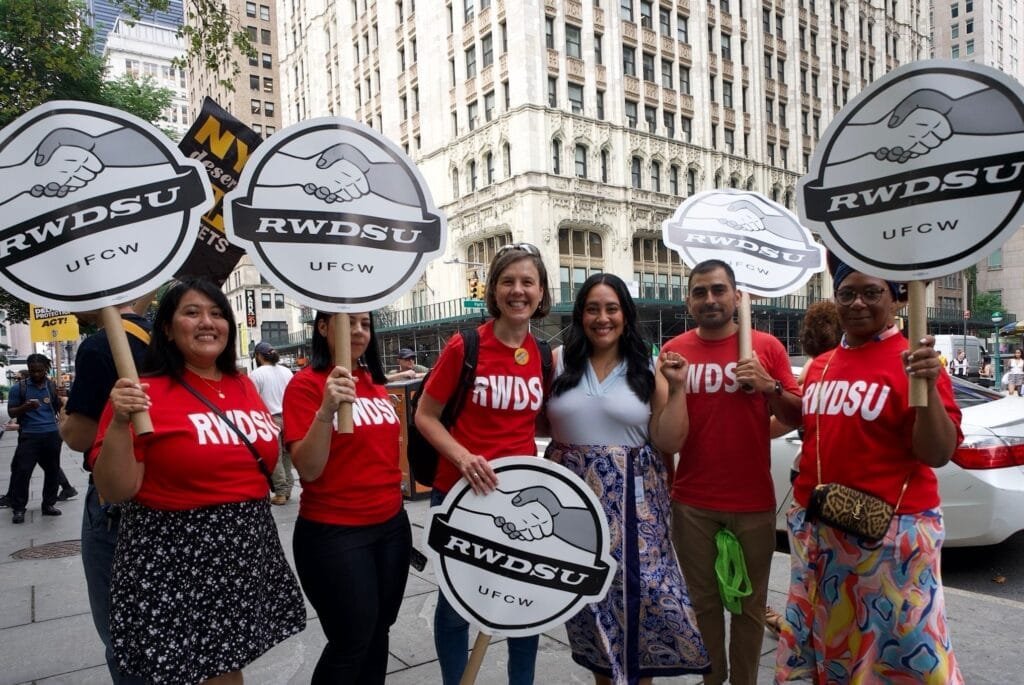
The rise of delivery apps, accessibility awareness, and big data means we have to update our labor standards to protect regular people. We want to give workers the facts they need to stand up for themselves, and we want everyday New Yorkers to help make the rules. We are committed to doing our part by passing laws that guarantee fast and fair pay, stop companies from cheating their workers, and support a higher quality of life.
Trip-Level Data Reporting
Sponsored by Council Member Brewer
This bill would require third-party delivery companies to submit trip-level data to the Department of Consumer and Worker Protection (DCWP). Right now, the city does not have information about how delivery platforms structure trips or impose time pressures. This bill gives the city the tools it needs to understand how delivery platforms shape working conditions and street safety so policies can better protect delivery workers.
Delivery Protection Act
Sponsored by Council Member Cabán
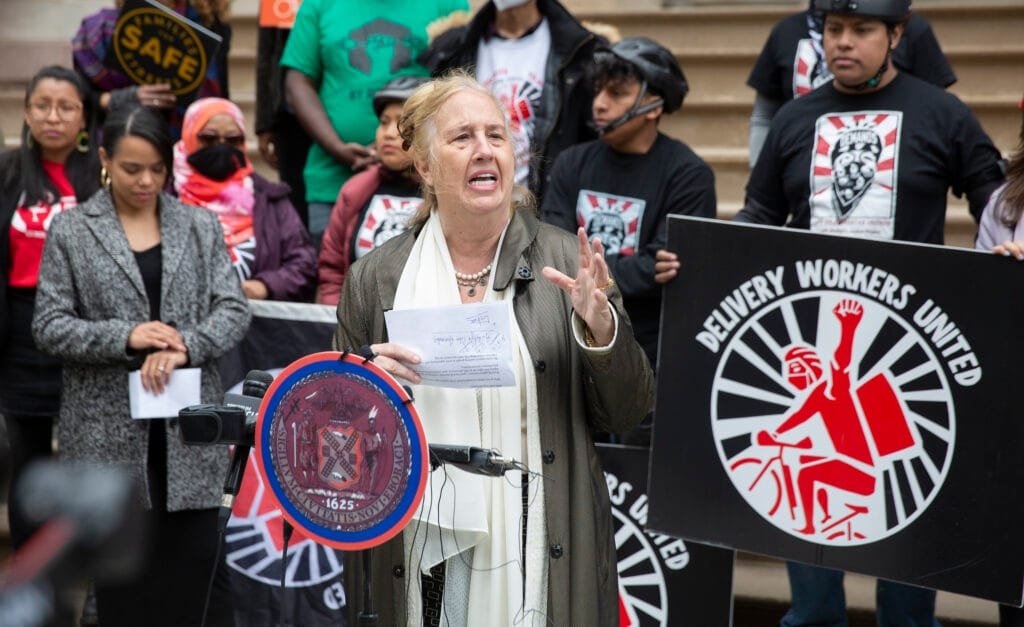
The Delivery Protection Act will hold big delivery corporations like Amazon accountable and keep New Yorkers safe by improving labor conditions at the “Last Mile” facilities that big companies use to get packages from warehouses to your door. This legislation tackles one of the biggest and safety and health issues related to one of the fastest growing industries in the City. With more than a billion packages expected to be delivered in 2026, this is a critical step in protecting workers.
Self-Service Checkout Regulation
Sponsored by Council Member Farías
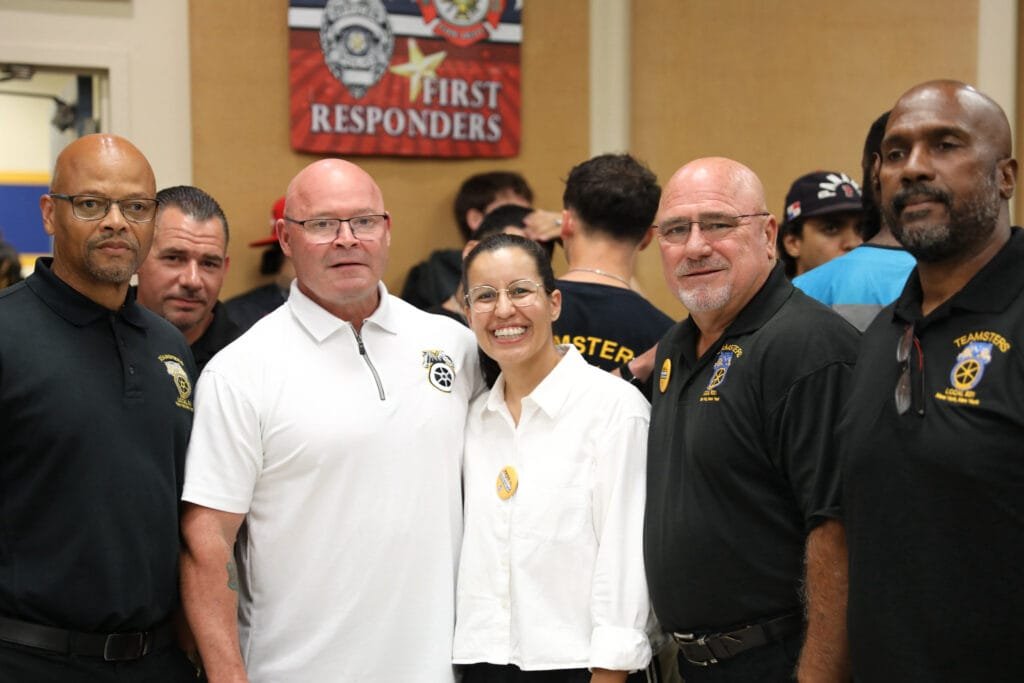
This bill would require pharmacies and food retail stores to staff self-service checkout areas with a ratio of 1 employee for every 3 self-service checkout kiosks, and to impose a 15-item maximum for self-service checkout purchases.
Delivery apps and the rise in online shopping has changed our city streets forever. Without smart leadership, this new way of life leads to preventable pedestrian accidents and dangerous environmental hazards. We need common-sense laws that protect pedestrians and hold corporations responsible for their pollution.
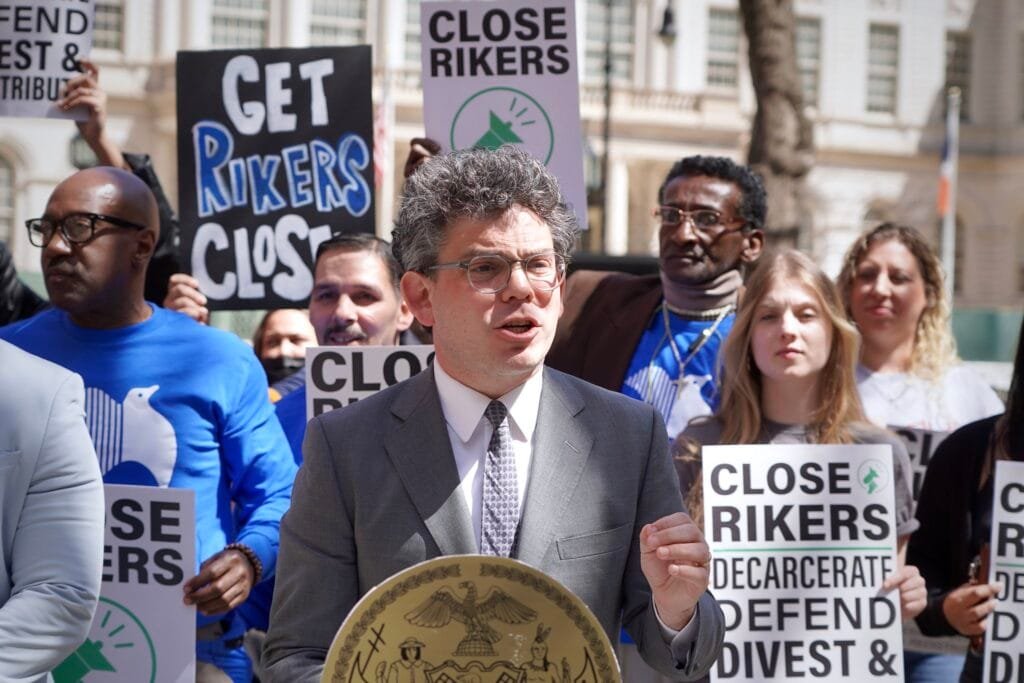
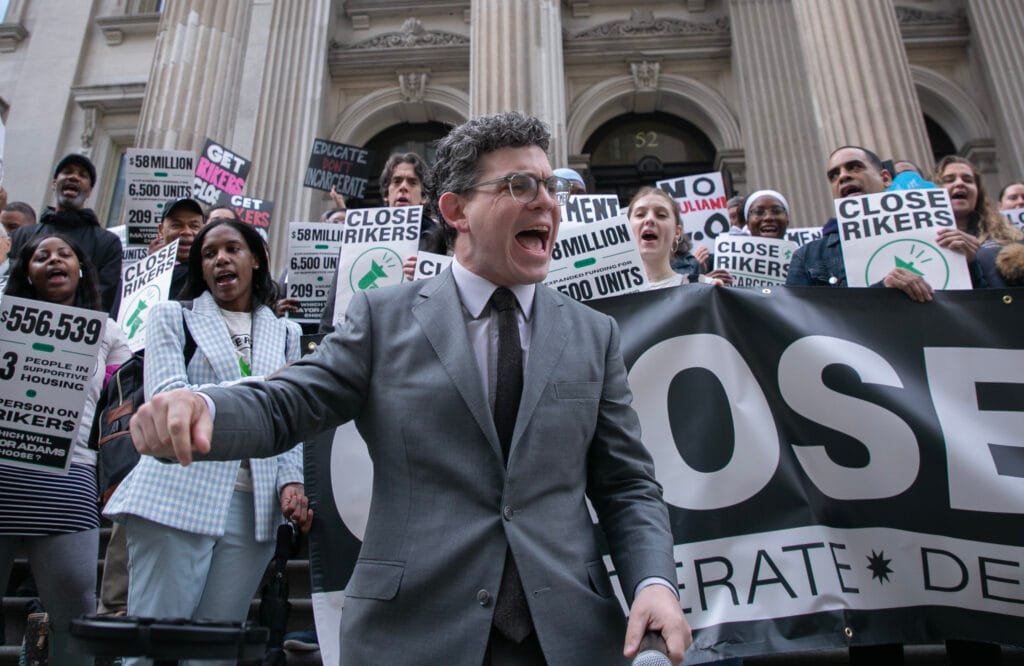
Importantly, we are committed to a safer city where the right to protest is protected and New Yorkers can walk in their neighborhood without fear. We are working to strengthen accountability and transparency for public safety. By getting rid of biased policing tools like the criminal group database, New Yorkers’ public safety is protected without sacrificing their freedoms.
Indirect Source Rule
Sponsored by Council Member Avilés
The growth of e-commerce giants like Amazon has resulted in a major expansion of last-mile warehouses and distribution centers in New York City. These centers, which are disproportionately located in working-class communities of color, increase truck traffic in nearby neighborhoods and worsen air quality. This billrequires the commissioner of the Department of Environmental Protection to design and implement a way to capture emissions from warehouses over 50,000 sq. ft., or any other structure that attracts “indirect” or “mobile” sources of air pollution.

Capping Renewable Energy Credits
Sponsored by Council Member De La Rosa
This bill would limit the deduction a building owner can take due to the purchase of renewable energy credits in order to comply with Local Law 97. A building would be limited to using Renewable Energy Credits up to 10% of the building’s electricity emissions. This ensures that real emissions reductions are earned, not bought out.

Ban the Scan
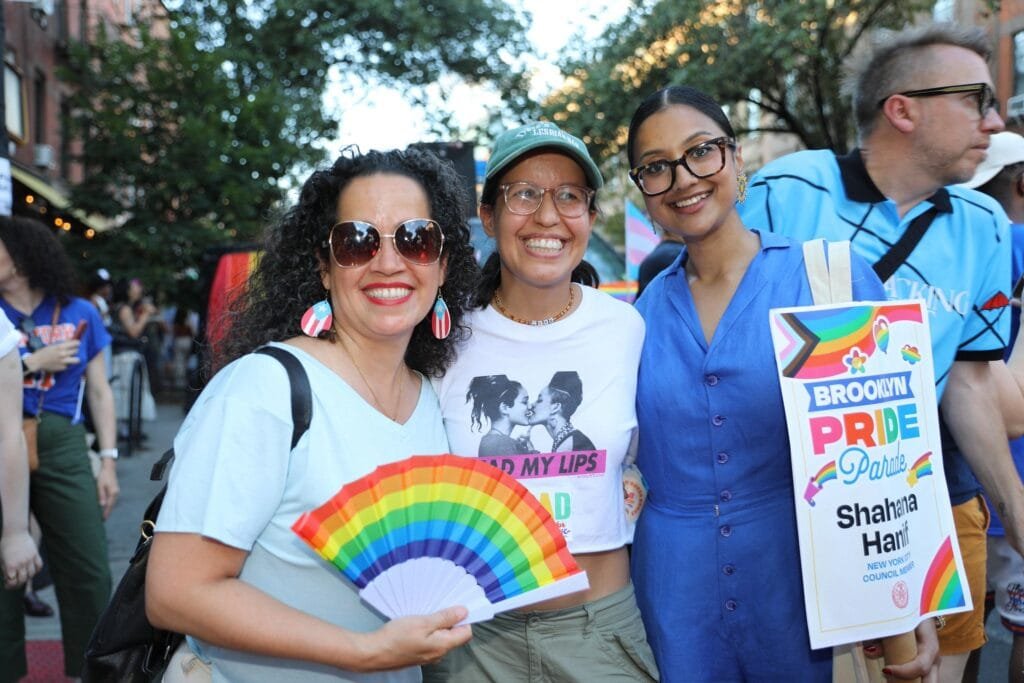
Sponsored by Council Member Hanif
This bill would make it unlawful for any place or provider of public accommodation to use biometric recognition technology to verify or identify a customer. It would also require providers to notify customers if biometric information is collected and obtain written consent before use, while ensuring collected data is protected and written policies and publicly available. This bill additionally creates a private right of action for violations.
The CURB Act
Sponsored by Council Member Ossé
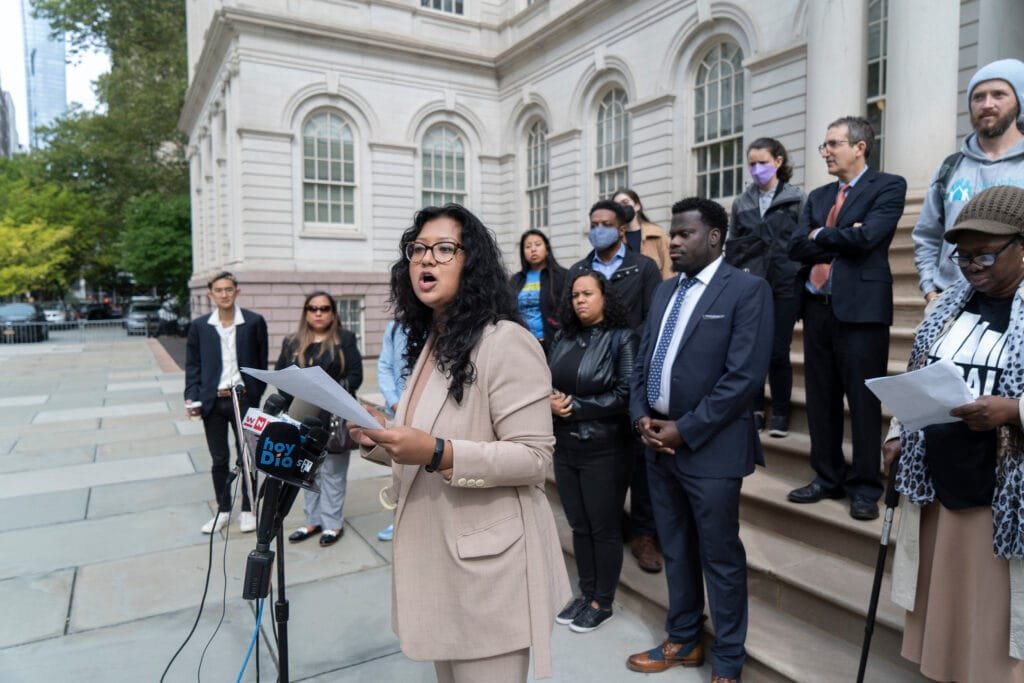
This bill would regulate the Police Department’s (NYPD) response to public gathering at which individuals are expressing rights protected by the First Amendment to the United States Constitution and Article I, Section 8 of the New York State Constitution. Specifically, the bill would:
- Prohibit the deployment the NYPD’s Strategic Response Group to such events, and generally prohibit the Strategic Response Group from being used for crowd control purposes.
- Prohibited the NYPD from using certain police tactics when responding to first amendment events, or for the purpose of conducting crowd control.
- Require the NYPD to publish a quarterly report on officer deployment in response to first amendment events.
Department of Community Safety
Sponsored by Council Member Restler
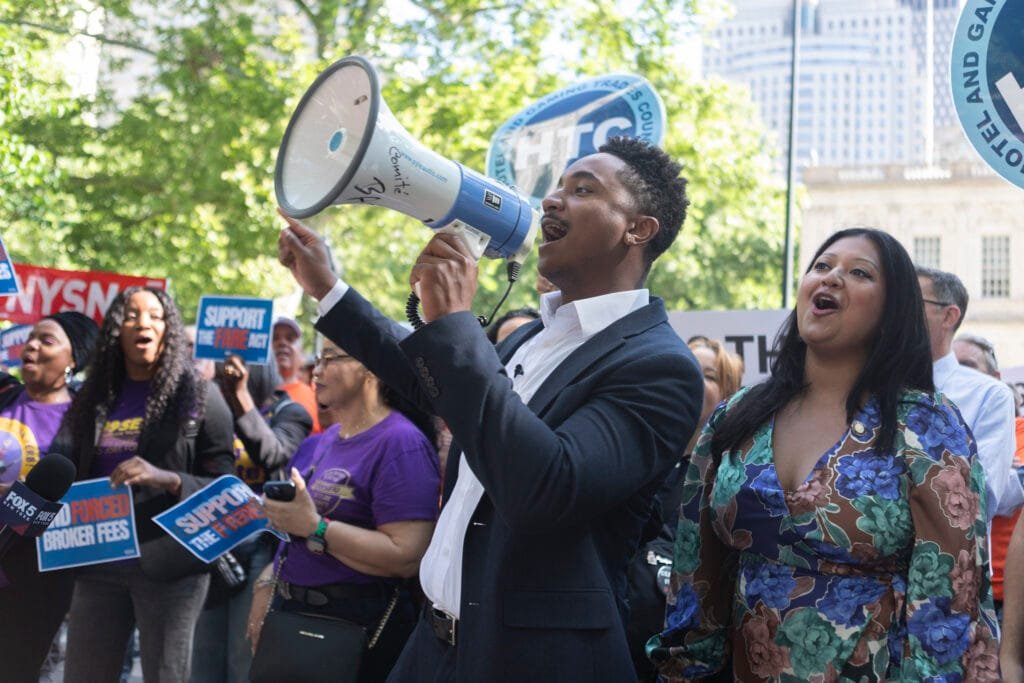
This bill would create a permanent Department of Community Safety in the Charter to promote community safety and non-police emergency response. A critical part of the Mayor’s platform and long-time priority for many Progressive Caucus members, this legislation will help reshape how we respond to mental health crises and support New Yorkers in need of assistance, both proactively and in emergency situations.
Abolish GANGS Database
Sponsored by Council Member Stevens
The bill abolishes the NYPD’s criminal group (GANGS) database and prohibits the establishment of a successor database.

Lighting Underneath Elevated Trains
Sponsored by Council Member Thomas-Henry
This bill would require that the Department of Transportation assess streets and sidewalks underneath elevated train infrastructure to determine if lighting is needed. In areas where the Department determines that lighting is needed, the Department would be required to install lighting in that area within 3 years. Subject to appropriations and necessary approvals, such lighting would need to be of a non-standard, distinctive design. The Department would be required to provide a report on the successes and failures of installation.